JacksMars

Since I was a young child Mars held a special fascination for me. It was so close and yet so faraway. I have never doubted that it once had advanced life and still has remnants of that life now. I am a dedicated member of the Mars Society,Norcal Mars Society National Space Society, Planetary Society, And the SETI Institute. I am a supporter of Explore Mars, Inc. I'm a great admirer of Elon Musk and SpaceX. I have a strong feeling that Space X will send a human to Mars first.

Pages

  • Home

Thursday, March 29, 2018

'Marsquakes' Could Shake Up Planetary Science

'Marsquakes' Could Shake Up Planetary Science: InSight, the next mission to the Red Planet, will use seismology to see into the depths of Mars.
Posted by Jack Waldbewohner at 4:05 AM No comments:
Email ThisBlogThis!Share to XShare to FacebookShare to Pinterest

Tuesday, March 27, 2018

The Space Review: Reviews: Rocket Billionaires and The Space Barons

The Space Review: Reviews: Rocket Billionaires and The Space Barons
Posted by Jack Waldbewohner at 4:16 AM No comments:
Email ThisBlogThis!Share to XShare to FacebookShare to Pinterest

The Space Review: Confrontation or cooperation: US-China space relations

The Space Review: Confrontation or cooperation: US-China space relations
Posted by Jack Waldbewohner at 4:15 AM No comments:
Email ThisBlogThis!Share to XShare to FacebookShare to Pinterest

The Space Review: Equitable sharing of benefits of space resources

The Space Review: Equitable sharing of benefits of space resources
Posted by Jack Waldbewohner at 4:13 AM No comments:
Email ThisBlogThis!Share to XShare to FacebookShare to Pinterest

The Space Review: New vehicles, new companies, and new competition in the launch market

The Space Review: New vehicles, new companies, and new competition in the launch market
Posted by Jack Waldbewohner at 4:12 AM No comments:
Email ThisBlogThis!Share to XShare to FacebookShare to Pinterest

The Space Review: The measure of a man: Evaluating the role of astronauts in the Manned Orbiting Laboratory program (part 2)

The Space Review: The measure of a man: Evaluating the role of astronauts in the Manned Orbiting Laboratory program (part 2)
Posted by Jack Waldbewohner at 4:09 AM No comments:
Email ThisBlogThis!Share to XShare to FacebookShare to Pinterest

Monday, March 26, 2018

tEN aLIEN lANDSCAPES oN eARTH!


10 alien landscapes on Earth


Other planets may be out of reach, but Earth is home to many out-of-this-world landscapes.


Anyone who has studied the images sent back by the space probes and rovers dotted throughout the solar system has no doubt wondered what it would be like to stand on another world. While tourism to other planets is still some distance off, Earth has its own fair share of alien landscapes. Here are 10 that you could go and see right now.

1.  Wadi Rum, Jordan

Wadi Rum is a sand-filled valley cut into sandstone and granite in Jordan.
DANIEL CASE
You’d be forgiven for thinking that this landscape was captured by a Mars rover, with its bright orange sands and towering cliffs. Wadi Rum (Arabic for ‘Sand Valley’) in Jordan looks so much like the surface of the Red Planet that it has been used as a shooting location for movies including The Martian and Rogue One.

2.  Marble Caves, Patagonia

The Marble Caves have been worn away by the waters of General Carrera Lake.
CHELSEA3048 / FLICKR
Situated on General Carrera Lake, Chile, the Marble Caves (Cuevas de Mármol) are the product of more than 6,000 years of wave erosion. During the spring, shallower waters reflect turquoise hues, while in the summer, water levels rise to produce a deeper cerulean blue. The caves are only accessible by boat.

3.  Deep sea brine pools

Brine pools are ‘lakes’ of extra-salty water that can form at the bottom of the ocean.
NAUTILUS / OCEAN EXPLORATION TRUST
A lake within an ocean is one way to describe these brine pools that dot the sea floor. The pools are formed by the accumulation of extremely concentrated brine, with a salt content three eight to times higher than that of the surrounding water. The brine is heavier than the surrounding solution and so sinks to the bottom, forming a lake complete with shoreline and waves. Hardy extremophile bacteria live along the shore, feeding on methane and providing a small ecosystem with energy kilometres from sunlight.

4.  White Sands National Monument, USA

The White Sands National Monument is the largest field of gypsum dunes in the world.
DAVID CLAPP / GETTY
Found in New Mexico, United States, is the White Sands National Monument, part of the largest field of gypsum crystals in the world. The calcium-based gypsum is responsible for the bright white colouration of the dunes. Unlike quartz-based sand, gypsum sand can be walked on safely with bare feet as it does not pass on the Sun’s heat as readily.

5.  Zhanyge Danxia Geopark, China

The layer-cake hills of Zhanyge Danxia are the product of 24 million years of tectonics and erosion.
RATNAKOM PIYASIRISOROST / GETTY
With beautiful, surreal-coloured mountains that wouldn’t look out of place in a Dr Seuss book, the Zhanyge Danxia Geopark in north-west China is an artwork 24 million years in the making. Red sandstone is sandwiched between layers of other minerals, creating a massive layer-cake structure. The movement of tectonic plates in combination with erosion then carved out the mesmerising slanted structures visible today.

6.  Darvaza crater, Turkmenistan

Darvaza crater, known as ‘the door to hell’, is the result of a gas field explosion.
DANIEL KREHER / GETTY
Aptly nicknamed ‘the door to hell’, this fiery pit in Turkmenistan is the result of a failed Soviet mining expedition. Just as the Soviet engineers realised that the prospective oil field site was in fact a gas pocket, the ground beneath gave way, collapsing into a crater. Fearing the release of toxic gas, the engineers set the escaping fumes alight. They expected the gas to burn off after a few weeks, but it is still going strong more than 45 years later.

7.  Salar De Uyuni, Bolivia

A thin coating of rain turns the Salar De Uyuni salt flats into a vast mirror.
PIRIYA PHOTOGRAPHY / GETTY
More than 3,600 metres above sea level and covering more than 10,500 square kilometres, the Salar De Uyuni salt flats in Bolivia are the world’s largest. When it rains, the flats become an immense mirror stretching to the horizon. Salar De Uyuni is also a major lithium reservoir, containing up to 70% of the world’s known lithium reserves.

8.  The Cave of Crystals, Mexico

The structures within the Cave of Crystals dwarf explorers.
CARSTEN PETERS / GETTY
Buried deep below the state of Chihuahua, Mexico, is the Cave of Crystals, which contain some of the largest naturally occurring crystal formations ever found. Near 100% humidity and temperatures of up to 58 degrees Celsius make the caves a hostile place. Even with proper protective gear, a person can only tolerate around 10 minutes of exposure at a time, which is one reason the caves have barely been explored.

9.  Chocolate Hills, Philippines

The Chocolate Hills are made of coral limestone and covered in grass that turns brown in the dry season.
AFRIANDI / GETTY
Resembling giant alien ant hills, the Chocolate Hills in the Bohol province of the Philippines are named for their appearance during the dry season, when the green grass that covers them turns brown. Made out of limestone derived from coral and other fossils, the hills were formed by water erosion as the land was lifted by tectonic movements. Many of the hills have hidden caves and springs within.

10.  Red Beach, China

The plant Suaeda salsa turns a vivid red in autumn.
AFP / GETTY
The vivid crimson wetlands of Panjing, China, are better known as the Red Beach. The vibrant colouration comes from a special type of seaweed called Suaeda, which can withstand highly alkaline conditions that would kill other species. The seaweed mimics deciduous trees, gaining their red colour in the autumn to produce an alien landscape that you could be easily tricked into thinking is from another world.

Click here to Reply or Forward
26.9 GB (26%) of 101 GB used
Manage
Terms - Privacy
Last account activity: 0 minutes ago
Details

TASKS

Welcome

Posted by Jack Waldbewohner at 8:51 AM No comments:
Email ThisBlogThis!Share to XShare to FacebookShare to Pinterest

Friday, March 23, 2018

The New Omega Moonwatch

Omega takes us to the Dark Side with their new moonwatch

 John Biggs,TechCrunch Wed, Mar 21 11:38 AM PDT 
  • Reactions
  •  
  • Sign in to like
  •  
  • Reblog on Tumblr
  •  
  • Share
  •  
  • Tweet
  •  
  • Email
Omega has just announced a new version of their iconic Moonwatch, the
Omega has just announced a new version of their iconic Moonwatch, the chronograph that was worn most notably by Neil Armstrong on the surface of the moon. Their new model, the Dark Side of the Moon Apollo 8, features the traditional Moonwatch design with a few unique tweaks.
The has an exhibition back - you can see the movement through a glass crystal - as well as a skeletonized face. The bridges - the pieces that hold the gears in place - are laser etched with a representation of the lunar surface and blackened for effect. It contains a manual wind mechanical movement and, while there is no pricing yet, should come in at about $9,000.
The back of the case features an interesting quote. From the release:
 
“WE’LL SEE YOU ON THE OTHER SIDE” – the special words engraved on the caseback – were spoken by Command Module Pilot Jim Lovell on board the Apollo 8 mission at the start of the crew’s pioneering orbit to the dark side of the moon – a mysterious hemisphere never seen before by human eyes. Seconds before the spacecraft disappeared beyond the range of radio contact, Lovell spoke these final assuring words to ground control.
Why is this fancy and particularly expensive watch interesting? First, it's a nice riff on the original Moonwatch, the first mechanical watch on the moon. Omega has been flogging the Moonwatch brand for decades and now they're expanding to other space missions, including the Apollo 8. It's a beautiful homage to the Golden Age of space exploration and it's a bit more modern-looking than the original, austere black-and-white Speedmaster.
[gallery ids="1610258,1610257,1610256"]
  • This article originally appeared on TechCrunch.
Posted by Jack Waldbewohner at 2:46 AM No comments:
Email ThisBlogThis!Share to XShare to FacebookShare to Pinterest

Thursday, March 22, 2018

Curiosity Rover 2000 Days On Mars

http://www.bbc.com/news/science-environment-43494227
Posted by Jack Waldbewohner at 10:45 AM No comments:
Email ThisBlogThis!Share to XShare to FacebookShare to Pinterest

Wednesday, March 21, 2018

New 'AR' Mobile App Features 3-D NASA Spacecraft

New 'AR' Mobile App Features 3-D NASA Spacecraft: NASA spacecraft travel to far-off destinations in space, but a new mobile app produced by NASA's Jet Propulsion Laboratory, Pasadena, California, brings spacecraft to users.
Posted by Jack Waldbewohner at 3:49 AM No comments:
Email ThisBlogThis!Share to XShare to FacebookShare to Pinterest

Tuesday, March 20, 2018

Space-X To Build BFR At The Port of Los Angeles

https://arstechnica.com/science/2018/03/spacex-indicates-it-will-manufacture-the-bfr-rocket-in-los-angeles/
Posted by Jack Waldbewohner at 4:24 AM No comments:
Email ThisBlogThis!Share to XShare to FacebookShare to Pinterest

Monday, March 19, 2018

The Space Review: Review: The Planet Factory

The Space Review: Review: The Planet Factory
Posted by Jack Waldbewohner at 2:49 PM No comments:
Email ThisBlogThis!Share to XShare to FacebookShare to Pinterest

The Space Review: Bombs in orbit? Verification and violation under the Outer Space Treaty

The Space Review: Bombs in orbit? Verification and violation under the Outer Space Treaty
Posted by Jack Waldbewohner at 2:45 PM No comments:
Email ThisBlogThis!Share to XShare to FacebookShare to Pinterest

The Space Review: A changing shade of Blue

The Space Review: A changing shade of Blue
Posted by Jack Waldbewohner at 2:43 PM No comments:
Email ThisBlogThis!Share to XShare to FacebookShare to Pinterest

The Space Review: The measure of a man: Evaluating the role of astronauts in the Manned Orbiting Laboratory program (part 1)

The Space Review: The measure of a man: Evaluating the role of astronauts in the Manned Orbiting Laboratory program (part 1)
Posted by Jack Waldbewohner at 2:41 PM No comments:
Email ThisBlogThis!Share to XShare to FacebookShare to Pinterest

Thursday, March 15, 2018

NASA Mars Mission Tours California

NASA Mars Mission Tours California: InSight will be the first mission to another planet launched from the West Coast. It launches from Vandenberg Air Force Base in May.
Posted by Jack Waldbewohner at 3:35 AM No comments:
Email ThisBlogThis!Share to XShare to FacebookShare to Pinterest

Wednesday, March 14, 2018

Next NASA Mars Rover Reaches Key Manufacturing Milestone

Next NASA Mars Rover Reaches Key Manufacturing Milestone: NASA's Mars 2020 mission has begun the assembly, test and launch operations (ATLO) phase of its development, on track for a July 2020 launch to Mars.
Posted by Jack Waldbewohner at 4:18 AM No comments:
Email ThisBlogThis!Share to XShare to FacebookShare to Pinterest

Tuesday, March 13, 2018

The Space Review: Review: The Future of Humanity

The Space Review: Review: The Future of Humanity
Posted by Jack Waldbewohner at 4:07 AM No comments:
Email ThisBlogThis!Share to XShare to FacebookShare to Pinterest

The Space Review: Why the Outer Space Treaty remains valid and relevant in the modern world

The Space Review: Why the Outer Space Treaty remains valid and relevant in the modern world
Posted by Jack Waldbewohner at 4:04 AM No comments:
Email ThisBlogThis!Share to XShare to FacebookShare to Pinterest

The Space Review: The Secretary of (Space) Commerce

The Space Review: The Secretary of (Space) Commerce
Posted by Jack Waldbewohner at 4:03 AM No comments:
Email ThisBlogThis!Share to XShare to FacebookShare to Pinterest

The Space Review: Our fear of “heritage” imperils our future

The Space Review: Our fear of “heritage” imperils our future
Posted by Jack Waldbewohner at 4:01 AM No comments:
Email ThisBlogThis!Share to XShare to FacebookShare to Pinterest

The Space Review: A new focus on exploration worries space technology advocates

The Space Review: A new focus on exploration worries space technology advocates
Posted by Jack Waldbewohner at 4:00 AM No comments:
Email ThisBlogThis!Share to XShare to FacebookShare to Pinterest

The First Mars Launch From Vandenberg Air Force Base

https://www.jpl.nasa.gov/news/news.php?feature=7077&utm_source=iContact&utm_medium=email&utm_campaign=NASAJPL&utm_content=daily20180312-1


Posted by Jack Waldbewohner at 3:50 AM No comments:
Email ThisBlogThis!Share to XShare to FacebookShare to Pinterest

Monday, March 12, 2018

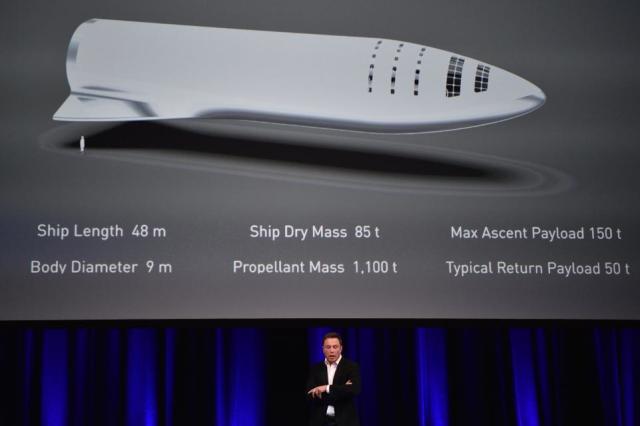
Elon's Mars Rocket Could Fly In 2019

Style

Elon Musk at SXSW: Mars Spaceship Will Be Ready for First Flights by 2019

Newsweek Aristos Georgiou,Newsweek 5 hours ago 
  • Reactions
  •  
  • Sign in to like
  •  
  • Reblog on Tumblr
  •  
  • Share
  •  
  • Tweet
  •  
  • Email
Elon Musk made a surprise appearance at the South by Southwest (SXSW) Conference on Sunday where he revealed during a Q&A that his company SpaceX’s Mars rocket could be ready for test flights as soon as next year.
The billionaire entrepreneur has previously said he is aiming to launch a cargo mission to Mars by 2022 as part of a plan to eventually set up a human colony on the Red Planet.
“I can tell you that we are building the first ship, the first Mars interplanetary ship right now,” Musk told a crowd at the conference in Austin, Texas. “And I think we’ll be able to do short flights, sort of up-and-down flights, probably some time in the first half of next year,” he said.
Trending: Deaf Cat Named 'Animal Psychic' for Russia World Cup 2018
Musk was referring to SpaceX’s next-generation BFR rocket system that will be capable of interplanetary space travel while also being completely reusable if the project is successful.
However, he joked that the timelines for his projects tended to be a little ambitious, prompting laughter from the audience.
A single launch of the BFR would only cost around $5 to $6 million, making it cheaper per flight than even the Falcon I, SpaceX’s first rocket, which was designed to simply launch satellites into Earth’s orbit.
Don't miss: Sally Field's Son, Sam Greisman, Finally Meets Olympic Crush Adam Rippon
GettyImages-855377456
Posted by Jack Waldbewohner at 3:17 PM No comments:
Email ThisBlogThis!Share to XShare to FacebookShare to Pinterest

Saturday, March 10, 2018

NASA Will Use Nukes TO Deflect Asteroids Menacing Earth


Scientists have designed a nuclear weapon-wielding spacecraft powerful enough to deflect a 1600-ft asteroid currently circling the sun.
Set for multiple close encounters with Earth over the next hundred years, there is a  chance - however vanishingly small - that the asteroid Bennu could one day collide with our planet.
But don’t worry—NASA has a plan to save us all. And it involves nukes.
Very small risk of collision
NASA lists 78 dates on which Bennu has a tiny chance of colliding with Earth. Taken together, they give an impact risk of one in 2700—small, but not impossible.
Asteroid impacts can be devastating. Some 66 million years ago, the impact of a 9-mile asteroid is widely believed to have wiped out most of Earth’s dinosaurs. In 2013, a 65-ft asteroid entered the skies above Russia, exploding over Chelyabinsk Oblast. The blast caused extensive damage and injured nearly 1,500 people.

Called the Hypervelocity Asteroid Mitigation Mission for Emergency Response, or HAMMER, the "impactor" spacecraft would be deployed to deflect a small asteroid with its own bulk. In certain cases, however, it would set off a nuclear weapon.
“If the asteroid is small enough, and we detect it early enough, we can do it with the impactor,” physicist and study co-author David Dearborn of the Lawrence Livermore National Laboratory told BuzzFeed News. “The impactor is not as flexible as the nuclear option when we really want to change the speed of the body in a hurry.”

In an ideal situation, lots of these spacecraft would fly into the path of the asteroid. As it would plow through them it would be pummeled by 22,000mph collisions. These collisions would hopefully slow down the asteroid enough to divert its trajectory.
“You have to be careful not to slow it down just enough to go from hitting the [side] of the Earth to hitting its center,” Dearborn said.

The growing field of planetary protection


Unfortunately for us vulnerable earthlings, HAMMER is a plan which may never be built. The proposal is one of a growing number of potential planetary protection efforts developed following a 2010 National Research Council report that called for the development of NEO hazard mitigation plans.
Researchers modelled their work on Bennu because the asteroid is the best-studied near Earth object. It zipped past Earth in 1999 and again in 2005, but it won’t have another close encounter until 2054, NASA predicts. In September 2135 it may come as close as one-third the distance to the moon.
“Smart people are taking this seriously and thinking carefully about what might be done,” MIT impact expert Richard Binzel, who was not involved in the study, told BuzzFeed News. “These are reasonable ideas—well thought out.” 
“Hopefully we won't need an asteroid deflection plan,” he added. “But until we search, we don't know.”

Posted by Jack Waldbewohner at 3:34 PM No comments:
Email ThisBlogThis!Share to XShare to FacebookShare to Pinterest

Werher von Braun's 1949 Science Fiction Novel Nmed The Head Of Martian Society "Elon"

http://midnightinthedesert.com/this-1949-science-fiction-novel-by-a-legendary-rocket-designer-names-the-leader-of-martian-civilization-as-elon/?utm_campaign=shareaholic&utm_medium=linkedin&utm_source=socialnetwork
Posted by Jack Waldbewohner at 5:06 AM No comments:
Email ThisBlogThis!Share to XShare to FacebookShare to Pinterest

Friday, March 9, 2018

360 Video: Tour a Mars Robot Test Lab

360 Video: Tour a Mars Robot Test Lab: Engineers are practicing operations for NASA's Mars InSight lander, which is launching this spring.
Posted by Jack Waldbewohner at 4:17 AM No comments:
Email ThisBlogThis!Share to XShare to FacebookShare to Pinterest

Wednesday, March 7, 2018

A Fascinating Mars Photo

http://bgr.com/2018/03/07/mars-photo-surface-north-pole/
Posted by Jack Waldbewohner at 9:13 AM No comments:
Email ThisBlogThis!Share to XShare to FacebookShare to Pinterest

Tuesday, March 6, 2018

The Space Review: Review: Commercial Uses of Space and Space Tourism

The Space Review: Review: Commercial Uses of Space and Space Tourism
Posted by Jack Waldbewohner at 4:52 AM No comments:
Email ThisBlogThis!Share to XShare to FacebookShare to Pinterest

The Space Review: Bartolomeo: the new European challenge for boosting commercial activities on the International Space Station

The Space Review: Bartolomeo: the new European challenge for boosting commercial activities on the International Space Station
Posted by Jack Waldbewohner at 4:50 AM No comments:
Email ThisBlogThis!Share to XShare to FacebookShare to Pinterest

The Space Review: Why it’s a bad idea to weaken the Moon Treaty

The Space Review: Why it’s a bad idea to weaken the Moon Treaty
Posted by Jack Waldbewohner at 4:49 AM No comments:
Email ThisBlogThis!Share to XShare to FacebookShare to Pinterest

The Space Review: Launch Canada

The Space Review: Launch Canada
Posted by Jack Waldbewohner at 4:47 AM No comments:
Email ThisBlogThis!Share to XShare to FacebookShare to Pinterest

The Space Review: Movements of fire and shadow: The X-23 PRIME reentry vehicle and American satellite reconnaissance

The Space Review: Movements of fire and shadow: The X-23 PRIME reentry vehicle and American satellite reconnaissance
Posted by Jack Waldbewohner at 4:47 AM No comments:
Email ThisBlogThis!Share to XShare to FacebookShare to Pinterest

NASA Nears Testing On Fission Reactor For Moon And Mars Missions

NASA nears testing on fission reactor for missions to Moon, Mars


View gallery »
The notion that NASA is currently developing a nuclear power system might not seem that Earth shattering. The agency has flown a number of missions powered by radioisotope thermoelectric generators (RTGs) since 1965, such as on board the two Viking Mars landers, the Curiosity rover, the Apollo expeditions to the Moon, the two Voyager spacecraft, the New Horizons probe to Pluto, and the just-concluded Cassini mission to Saturn. But this time, with the Kilopower Project, NASA aims to shake things up on the surface of other planets.
RTGs produce thermoelectricity via the Seebeck effect—using the natural decay of a radioisotope heat source (typically Plutonium-238) to heat wires made from different types of metal, each shifting electron energy at different times, creating a current. This time, NASA is aiming for a fission nuclear power system that would enable long-duration stays on planetary surfaces.
Beyond solar technology, there is currently no off-the-shelf solution for powering long-term human missions to Mars. The Kilopower project is a near-term technology effort to develop preliminary concepts and technologies for an affordable fission power system that could provide safe, efficient, and plentiful energy for future robotic and human space exploration missions to the Moon, Mars, and other destinations.
While NASA uses solar power extensively to power spacecraft, satellites, and rovers, fission reactors can provide energy even in dark environments where solar cells cannot collect enough light. On Mars, the sun’s power varies widely throughout the seasons, and periodic dust storms can last for months. On the Moon, lunar nights can last for 14 days.
As planned, the Kilowatt reactor technology is intended to provide up to 10 kW of electrical power continuously for at least 10 years—approximately 10 times as much power than the multi-mission RTG used on Curiosity. Four Kilopower units producing a continuous 40 kW would provide enough power to establish an outpost. However, the technology is scalable down to 1 kW of power—which could provide modular energy sources for easier transportation and deployment during human exploration missions.
“We want a power source that can handle extreme environments,” said Lee Mason, NASA’s principal technologist for power and energy storage. “Kilopower opens up the full surface of Mars, including the northern latitudes where water may reside. On the Moon, Kilopower could be deployed to help search for resources in permanently shadowed craters.”
The reactor design includes a novel integration of readily available Uranium-235 (U-235) fuel that could enable further Planetary Science Decadal Surveys without relying on limited Plutonium-238 dioxide fuel. As designed, the reactor, dubbed “KRUSTY” (Kilopower Reactor Using Stirling TechnologY), uses a single rod of boron carbide to initiate the reaction. Passive sodium heat pipes, provided by Pennsylvania-based Advanced Cooling Technologies, transfer reactor heat to high-efficiency Stirling converters, supplied by Ohio-based Sunpower, Inc. An umbrella-like titanium radiator is used to cool the converters.
A beryllium oxide reflector surrounds the 6-in diameter uranium core and creates enough neutron reflection for the reactor to heat and go critical—or where a nuclear chain reaction is self-sustaining, with no increase or decrease in power or temperature. According to NASA, the reactor uses well-established nuclear physics to self-regulate the fission reactions and this feature eliminates the need for a complicated control system.
The Stirling converters use heat to create pressure forces that move a piston, which is coupled to an alternator to produce electricity. The components, even in the test setups, were either designed to be flight-like or flight-ready to ground test at near-flight conditions (i.e., vacuum environment, full thermal power and operating temperature, realistic configuration, and interfaces).
The Kilopower project is part of the NASA Space Technology Mission Directorate (STMD) Game Changing Development (GCD) program, which is managed by the NASA Langley Research Center. While NASA has attempted many space reactor programs since the 1970s, previous programs were limited by funding, schedule, and then-current technologies. The three-year, $20 million Kilopower project, which began in 2015, leverages significant technological breakthroughs from NASA research of the last decade, namely a 2012 proof-of-concept test involving Flattop, a monolithic-core fission reactor that incorporated a heat pipe and Stirling converter at the Nevada National Security Site’s (NNSS’s) National Criticality Experiments Research Center (NCERC).
“The 2012 experiment used an existing nuclear criticality device called Flattop to produce 24 W of electricity. It also confirmed the basics of the nuclear reactor physics and the heat transfer principles necessary to operate this kind of reactor in deep space. KRUSTY will expand on the 2012 experiment by testing a flight-like reactor core at full operating temperature,” said Mark Martinez, President of Mission Support and Test Services, LLC, which manages the NNSS.
The Kilopower project has been managed by the NASA Glenn Research Center (GRC) with partnership from the NASA Marshall Space Flight Center, the Department of Energy (DOE) National Nuclear Security Administration (NNSA), and several DOE laboratories, including Los Alamos National Laboratory, Y-12 National Security Complex, and NNSS.
After conducting numerous system tests with a depleted uranium core, GRC shipped the prototype power system from Cleveland to NNSS in late September 2017. The team at the NNSS National Critical Experiments Research Center began tests on the reactor core in November 2017 and connected the power system to the solid, cast, highly-enriched U-235 core (provided by Y-12) and initiated end-to-end checkouts this past January. According to project officials, the experiments should conclude with a 28-hour, full-power steady-state test (800 °C) in late March.
“The upcoming Nevada testing will answer a lot of technical questions to prove out the feasibility of this technology, with the goal of moving it to a technology readiness level of 5 (TRL 5). It’s a breadboard test in a vacuum environment, operating the equipment at the relevant conditions,” according to lead researcher Marc Gibson.
The next step would be qualifying the Kilopower system in a relevant environment, such as space.
The entire operation is being conducted as if the test was a flight test, with thorough analytical modeling, integrated nuclear test operations, ground safety measures, and interagency support. The only key items missing from the test are the radiator, full suite of Stirling converters, startup-rod, zero gravity environment, launch approval, flight hardware, flight qualification, and spacecraft integration.
NASA has gone through lengths to ensure that all present and future tests comply with the National Environmental Policy Act (NEPA) processes. Beyond needing to complete a final NEPA review before a flight test, several operational safety concerns must be addressed. At launch, the radiological hazard must be limited to less than 5 Ci (the amount of naturally occurring radioactivity of the U-235 core). The reactor, which would not be in operation until reaching the surface of a planet or being placed on a trajectory leaving Earth, will require sufficient radiation shielding to protect crew and sensitive flight equipment. Furthermore, the reactor design includes inherent fault tolerance, so any loss of cooling or failure of one of the heat pipes of Stirling converters would trigger an automatic reduction in fission power, preventing uncontrolled reactions.
Throughout the project, researchers have referred to the technology as an agnostic power system; and have outlined many potential planetary applications such as nuclear electric propulsion for orbiters and landers on Europa, Titan, Enceladus, Neptune, and Pluto; commercial space applications such as space power utility (pay-for-service), resource mining, and settlement; and terrestrial adaptations for powering military forward operating bases, unmanned vehicles, material processing, manufacturing, and electric propulsion.
“The reactor technology we are testing could be applicable to multiple NASA missions, and we ultimately hope that this is the first step for fission reactors to create a new paradigm of truly ambitious and inspiring space exploration,” said David Poston, chief reactor designer at Los Alamos. “Simplicity is essential to any first-of-a-kind engineering project—not necessarily the simplest design, but finding the simplest path through design, development, fabrication, safety and testing.”
Click here to Reply or Forward
Posted by Jack Waldbewohner at 4:36 AM No comments:
Email ThisBlogThis!Share to XShare to FacebookShare to Pinterest
Newer Posts Older Posts Home
Subscribe to: Comments (Atom)

Where am I?

About Me

Jack Waldbewohner
View my complete profile

Subscribe To

Posts
Atom
Posts
All Comments
Atom
All Comments

JacksMars

Loading...
Powered By Blogger

My Blog List

Popular Posts

  • https://mail-attachment.googleusercontent.com/attachment?ui=2&ik=1a90d4abea&view=att&th=12f415d0536a4684&attid=0.1.1&disp=inline&safe=1&zw&saduie=AG9B_P-92qE_SUPmFusFvcVfMsVs&sadet=1302793505217&sads=lzo4CGvwsexPpIMo9akuHtd62ok
    https://mail-attachment.googleusercontent.com/attachment?ui=2&ik=1a90d4abea&view=att&th=12f415d0536a4684&attid=0.1.1&dis...
  • Modelbrouwers.nl, forum, kennisbank en materialen voor de modelbouw - Slideshow
    Modelbrouwers.nl, forum, kennisbank en materialen voor de modelbouw - Slideshow
  • James Brown Discusses Elon Musk's Plan For A Manned Mars Mission
    Three launches of the heavy is enough for four to Mars Missions. Another three is good for the return ship. The supper heavy and orbit asse...
  • Footsteps on Mars at Poetry Forum (MessageID: 1742264)
    Footsteps on Mars at Poetry Forum (MessageID: 1742264)
  • (no title)
  • US / Soviet Space Cooperation
     https://nsarchive.gwu.edu/briefing-book/russia-programs/2021-04-12/us-soviet-cooperation-in-outer-space-part-1-1961-1975?eType=EmailBlastCo...
  • NASA Will Spend $2,941,394,557 On SpaceX's Massive Lunar Starship Lander!!!
  • A Space X Dragon Capsule For Deep Space Missions Includingf Mars
    Dragons for Deep Space? from orbithanger.com In a few years SpaceX's Dragon spaceships could be taking American astronauts to the ISS, ...
  • A NASA Panel Discusses Manned Mars Exploration
  • Russia Moves To Oust US From International Space Station
    ft.com   >  world   > Europe Search Sign out  ohomen171@gmail.com   Your account Home Wor...

Total Pageviews

Popular Posts

  • https://mail-attachment.googleusercontent.com/attachment?ui=2&ik=1a90d4abea&view=att&th=12f415d0536a4684&attid=0.1.1&disp=inline&safe=1&zw&saduie=AG9B_P-92qE_SUPmFusFvcVfMsVs&sadet=1302793505217&sads=lzo4CGvwsexPpIMo9akuHtd62ok
    https://mail-attachment.googleusercontent.com/attachment?ui=2&ik=1a90d4abea&view=att&th=12f415d0536a4684&attid=0.1.1&dis...
  • Modelbrouwers.nl, forum, kennisbank en materialen voor de modelbouw - Slideshow
    Modelbrouwers.nl, forum, kennisbank en materialen voor de modelbouw - Slideshow
  • James Brown Discusses Elon Musk's Plan For A Manned Mars Mission
    Three launches of the heavy is enough for four to Mars Missions. Another three is good for the return ship. The supper heavy and orbit asse...
  • Footsteps on Mars at Poetry Forum (MessageID: 1742264)
    Footsteps on Mars at Poetry Forum (MessageID: 1742264)
  • (no title)
  • US / Soviet Space Cooperation
     https://nsarchive.gwu.edu/briefing-book/russia-programs/2021-04-12/us-soviet-cooperation-in-outer-space-part-1-1961-1975?eType=EmailBlastCo...
  • NASA Will Spend $2,941,394,557 On SpaceX's Massive Lunar Starship Lander!!!
  • A Space X Dragon Capsule For Deep Space Missions Includingf Mars
    Dragons for Deep Space? from orbithanger.com In a few years SpaceX's Dragon spaceships could be taking American astronauts to the ISS, ...
  • A NASA Panel Discusses Manned Mars Exploration
  • Russia Moves To Oust US From International Space Station
    ft.com   >  world   > Europe Search Sign out  ohomen171@gmail.com   Your account Home Wor...
Powered By Blogger

Subscribe To

Posts
Atom
Posts
All Comments
Atom
All Comments

My Blog List

  • Jack's South America
    Argentina's Melt Down Offers A Global Warning
    15 hours ago
  • ohomen171's Journey Through Life
    Minnesota Welfare Fraud And Ties To Terrorism
    20 hours ago
  • Black Horizon
    Uniden unveils new digital scanner radio, the Uniden SDS150
    1 month ago
  • NOURIEL ROUBINI BLOG
    👉Will There Be A Recession In 2021 And Economic Collapse ?
    4 years ago
  • Celebrity Daily Photo
    Sophie Turner
    6 years ago
  • Tatamkulu
    Tangga Lagu Dahsyat 25 Agustus 2016
    9 years ago
  • The Huffington Post
    Breaking Down Barriers in Sexual and Reproductive Health Reporting in Africa
    9 years ago
  • Gonzalo Lira
    Mr. Abe’s Trigger
    12 years ago
  • The Automatic Earth
    The Automatic Earth on the move
    13 years ago
  • Soluções Imobiliarias
    Comece a resolver seu problema imobiliário hoje
    15 years ago
  • The Discovery Enterprise
  • PxlNinja

Search This Blog

Popular Posts

  • https://mail-attachment.googleusercontent.com/attachment?ui=2&ik=1a90d4abea&view=att&th=12f415d0536a4684&attid=0.1.1&disp=inline&safe=1&zw&saduie=AG9B_P-92qE_SUPmFusFvcVfMsVs&sadet=1302793505217&sads=lzo4CGvwsexPpIMo9akuHtd62ok
    https://mail-attachment.googleusercontent.com/attachment?ui=2&ik=1a90d4abea&view=att&th=12f415d0536a4684&attid=0.1.1&dis...
  • Modelbrouwers.nl, forum, kennisbank en materialen voor de modelbouw - Slideshow
    Modelbrouwers.nl, forum, kennisbank en materialen voor de modelbouw - Slideshow
  • James Brown Discusses Elon Musk's Plan For A Manned Mars Mission
    Three launches of the heavy is enough for four to Mars Missions. Another three is good for the return ship. The supper heavy and orbit asse...
  • Footsteps on Mars at Poetry Forum (MessageID: 1742264)
    Footsteps on Mars at Poetry Forum (MessageID: 1742264)
  • (no title)
  • US / Soviet Space Cooperation
     https://nsarchive.gwu.edu/briefing-book/russia-programs/2021-04-12/us-soviet-cooperation-in-outer-space-part-1-1961-1975?eType=EmailBlastCo...
  • NASA Will Spend $2,941,394,557 On SpaceX's Massive Lunar Starship Lander!!!
  • A Space X Dragon Capsule For Deep Space Missions Includingf Mars
    Dragons for Deep Space? from orbithanger.com In a few years SpaceX's Dragon spaceships could be taking American astronauts to the ISS, ...
  • A NASA Panel Discusses Manned Mars Exploration
  • Russia Moves To Oust US From International Space Station
    ft.com   >  world   > Europe Search Sign out  ohomen171@gmail.com   Your account Home Wor...

Blog Archive

  • ►  2025 (974)
    • ►  December (17)
    • ►  November (103)
    • ►  October (78)
    • ►  September (84)
    • ►  August (102)
    • ►  July (107)
    • ►  June (67)
    • ►  May (84)
    • ►  April (79)
    • ►  March (103)
    • ►  February (69)
    • ►  January (81)
  • ►  2024 (872)
    • ►  December (82)
    • ►  November (85)
    • ►  October (69)
    • ►  September (80)
    • ►  August (63)
    • ►  July (83)
    • ►  June (118)
    • ►  May (50)
    • ►  April (55)
    • ►  March (59)
    • ►  February (70)
    • ►  January (58)
  • ►  2023 (672)
    • ►  December (53)
    • ►  November (78)
    • ►  October (54)
    • ►  September (52)
    • ►  August (39)
    • ►  July (45)
    • ►  June (57)
    • ►  May (70)
    • ►  April (77)
    • ►  March (73)
    • ►  February (32)
    • ►  January (42)
  • ►  2022 (463)
    • ►  December (33)
    • ►  November (23)
    • ►  October (27)
    • ►  September (30)
    • ►  August (41)
    • ►  July (44)
    • ►  June (38)
    • ►  May (44)
    • ►  April (54)
    • ►  March (46)
    • ►  February (45)
    • ►  January (38)
  • ►  2021 (362)
    • ►  December (40)
    • ►  November (44)
    • ►  October (33)
    • ►  September (27)
    • ►  August (28)
    • ►  July (45)
    • ►  June (15)
    • ►  May (18)
    • ►  April (19)
    • ►  March (28)
    • ►  February (26)
    • ►  January (39)
  • ►  2020 (514)
    • ►  December (56)
    • ►  November (18)
    • ►  October (44)
    • ►  September (52)
    • ►  August (85)
    • ►  July (30)
    • ►  June (32)
    • ►  May (36)
    • ►  April (39)
    • ►  March (41)
    • ►  February (61)
    • ►  January (20)
  • ►  2019 (323)
    • ►  December (14)
    • ►  November (13)
    • ►  October (25)
    • ►  September (26)
    • ►  August (24)
    • ►  July (46)
    • ►  June (39)
    • ►  May (18)
    • ►  April (32)
    • ►  March (28)
    • ►  February (32)
    • ►  January (26)
  • ▼  2018 (333)
    • ►  December (20)
    • ►  November (23)
    • ►  September (7)
    • ►  August (37)
    • ►  July (35)
    • ►  June (19)
    • ►  May (41)
    • ►  April (40)
    • ▼  March (37)
      • 'Marsquakes' Could Shake Up Planetary Science
      • The Space Review: Reviews: Rocket Billionaires and...
      • The Space Review: Confrontation or cooperation: US...
      • The Space Review: Equitable sharing of benefits of...
      • The Space Review: New vehicles, new companies, and...
      • The Space Review: The measure of a man: Evaluating...
      • tEN aLIEN lANDSCAPES oN eARTH!
      • The New Omega Moonwatch
      • Curiosity Rover 2000 Days On Mars
      • New 'AR' Mobile App Features 3-D NASA Spacecraft
      • Space-X To Build BFR At The Port of Los Angeles
      • The Space Review: Review: The Planet Factory
      • The Space Review: Bombs in orbit? Verification and...
      • The Space Review: A changing shade of Blue
      • The Space Review: The measure of a man: Evaluating...
      • NASA Mars Mission Tours California
      • Next NASA Mars Rover Reaches Key Manufacturing Mil...
      • The Space Review: Review: The Future of Humanity
      • The Space Review: Why the Outer Space Treaty remai...
      • The Space Review: The Secretary of (Space) Commerce
      • The Space Review: Our fear of “heritage” imperils ...
      • The Space Review: A new focus on exploration worri...
      • The First Mars Launch From Vandenberg Air Force Base
      • Elon's Mars Rocket Could Fly In 2019
      • NASA Will Use Nukes TO Deflect Asteroids Menacing ...
      • Werher von Braun's 1949 Science Fiction Novel Nmed...
      • 360 Video: Tour a Mars Robot Test Lab
      • A Fascinating Mars Photo
      • The Space Review: Review: Commercial Uses of Space...
      • The Space Review: Bartolomeo: the new European cha...
      • The Space Review: Why it’s a bad idea to weaken th...
      • The Space Review: Launch Canada
      • The Space Review: Movements of fire and shadow: Th...
      • NASA Nears Testing On Fission Reactor For Moon And...
      • Robert Zubrin: A Purpose-Driven Space Program
      • Curiosity Tests a New Way to Drill on Mars
      • NASA InSight Mission to Mars Arrives at Launch Site
    • ►  February (38)
    • ►  January (36)
  • ►  2017 (478)
    • ►  December (28)
    • ►  November (47)
    • ►  October (43)
    • ►  September (55)
    • ►  August (42)
    • ►  July (35)
    • ►  June (43)
    • ►  May (44)
    • ►  April (29)
    • ►  March (39)
    • ►  February (30)
    • ►  January (43)
  • ►  2016 (408)
    • ►  December (35)
    • ►  November (41)
    • ►  October (40)
    • ►  September (33)
    • ►  August (48)
    • ►  July (78)
    • ►  June (30)
    • ►  May (35)
    • ►  April (30)
    • ►  March (12)
    • ►  February (4)
    • ►  January (22)
  • ►  2015 (252)
    • ►  December (23)
    • ►  November (6)
    • ►  October (17)
    • ►  September (42)
    • ►  August (23)
    • ►  July (12)
    • ►  June (4)
    • ►  May (27)
    • ►  April (18)
    • ►  March (42)
    • ►  February (20)
    • ►  January (18)
  • ►  2014 (101)
    • ►  December (10)
    • ►  November (5)
    • ►  October (11)
    • ►  September (19)
    • ►  August (6)
    • ►  July (3)
    • ►  June (11)
    • ►  May (5)
    • ►  April (5)
    • ►  March (11)
    • ►  February (11)
    • ►  January (4)
  • ►  2013 (118)
    • ►  December (1)
    • ►  November (7)
    • ►  October (7)
    • ►  September (13)
    • ►  August (6)
    • ►  July (18)
    • ►  June (8)
    • ►  May (11)
    • ►  April (7)
    • ►  March (13)
    • ►  February (13)
    • ►  January (14)
  • ►  2012 (229)
    • ►  December (11)
    • ►  November (20)
    • ►  October (15)
    • ►  September (19)
    • ►  August (36)
    • ►  July (7)
    • ►  June (8)
    • ►  May (39)
    • ►  April (39)
    • ►  March (10)
    • ►  February (8)
    • ►  January (17)
  • ►  2011 (443)
    • ►  December (15)
    • ►  November (31)
    • ►  October (29)
    • ►  September (12)
    • ►  August (7)
    • ►  July (5)
    • ►  June (20)
    • ►  May (38)
    • ►  April (91)
    • ►  March (10)
    • ►  February (53)
    • ►  January (132)
  • ►  2010 (259)
    • ►  December (110)
    • ►  November (97)
    • ►  October (52)

Followers

Simple theme. Powered by Blogger.